VIDEO

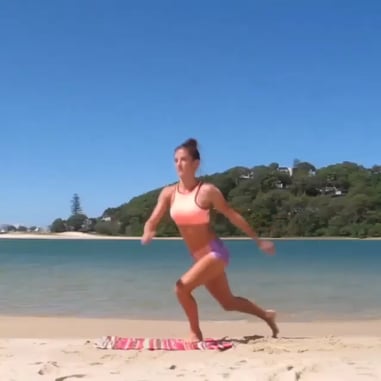
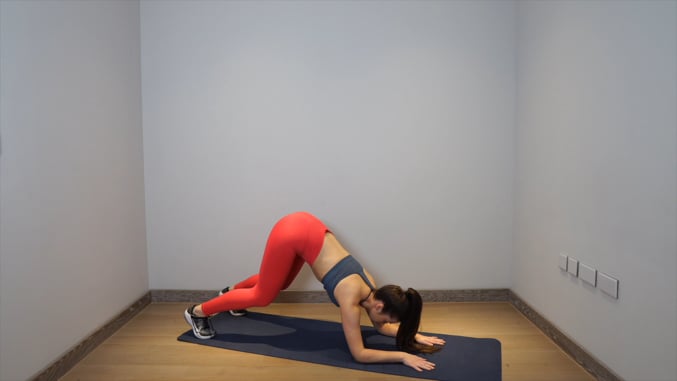
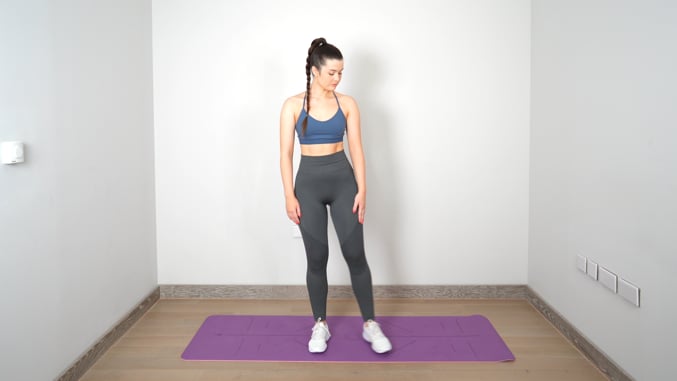
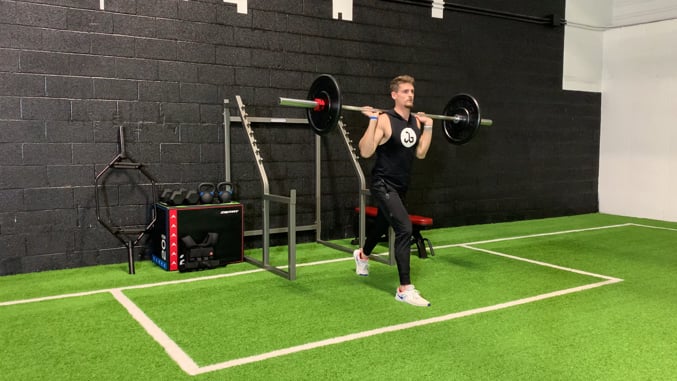
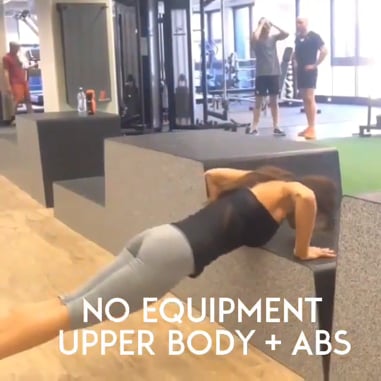
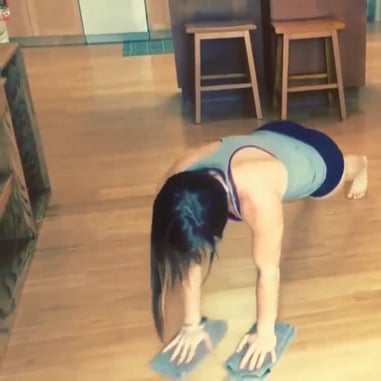
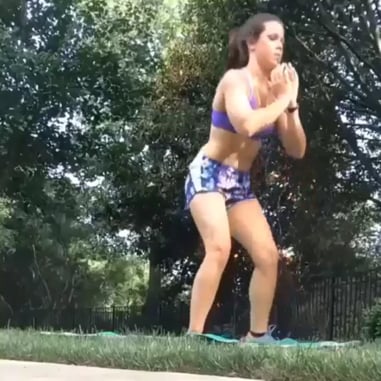
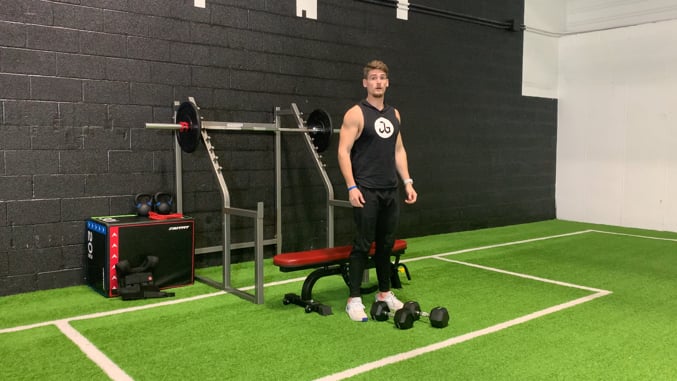
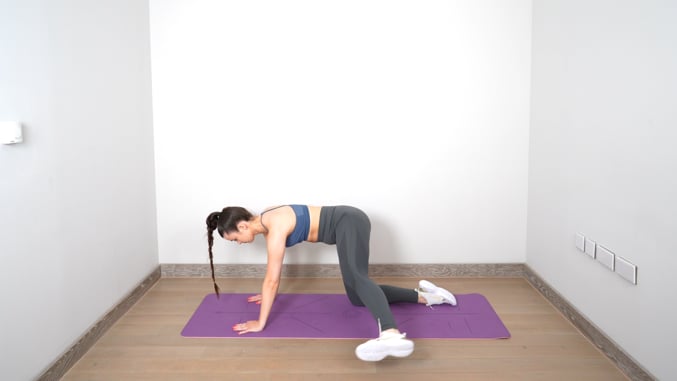
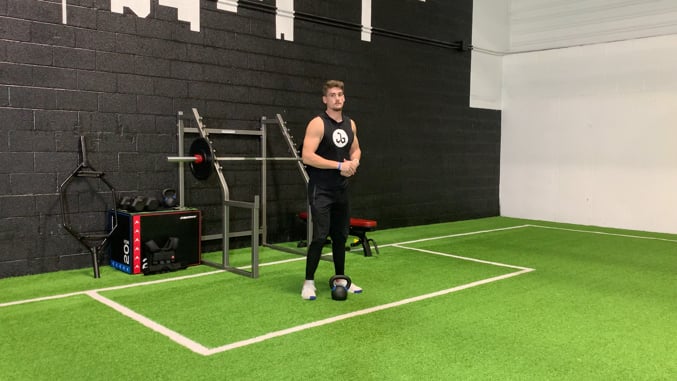
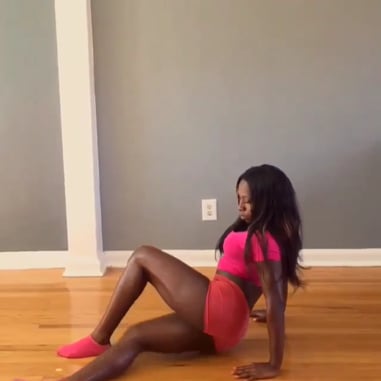
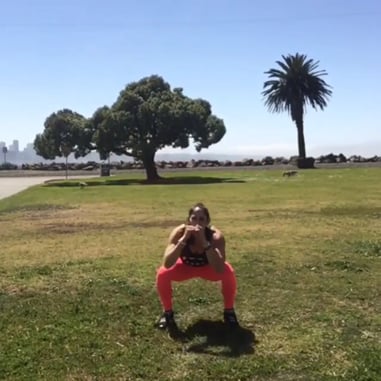
Deep Squats, Jumping Lunges, Pushups, Reverse Pushups, Elbow Plank Variation
  • Core
  • Legs
  • Abs
  • Biceps
  • Triceps
  • Trapezius
  • Gluteus
  • Hips
Level:Intermediate
Trainer:
Equipment:Step, Yoga Mat
Deep Squats, Jumping Lunges, Pushups, Reverse Pushups, Elbow Plank Variation
  • Core
  • Legs
  • Abs
  • Biceps
  • Triceps
  • Trapezius
  • Gluteus
  • Hips
Level:Intermediate
Trainer:
Equipment:Step, Yoga Mat

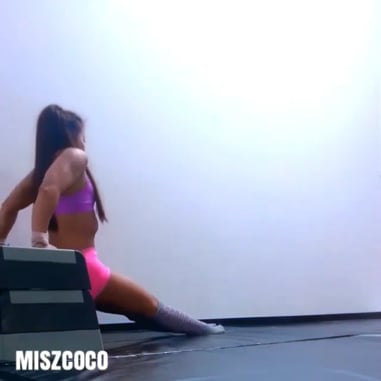
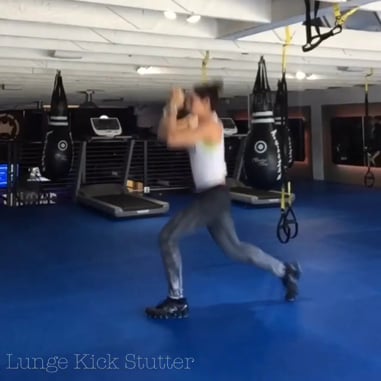
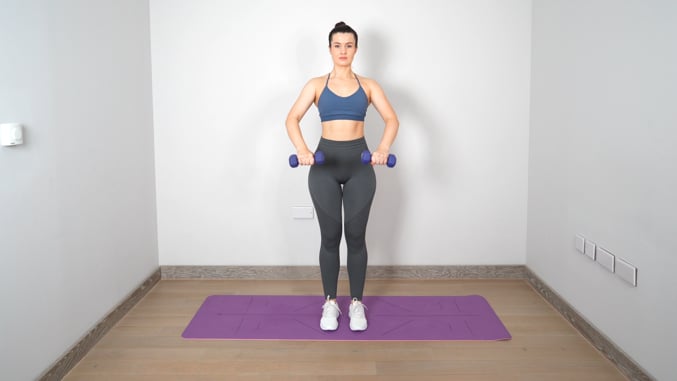
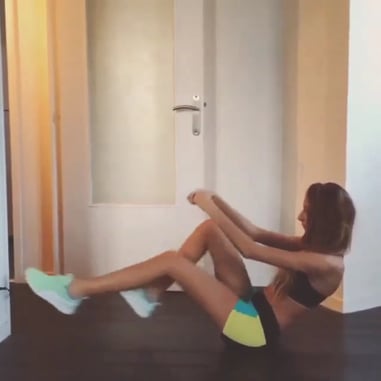
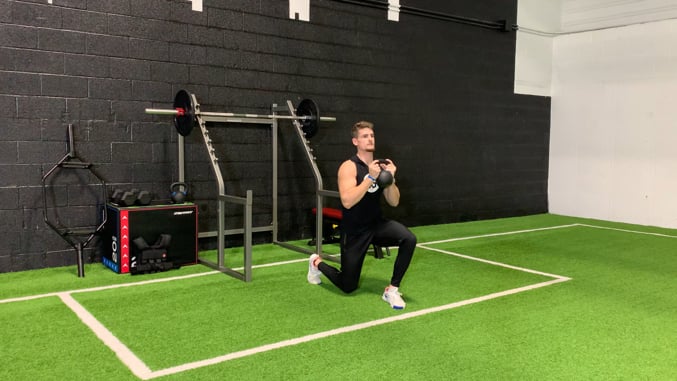
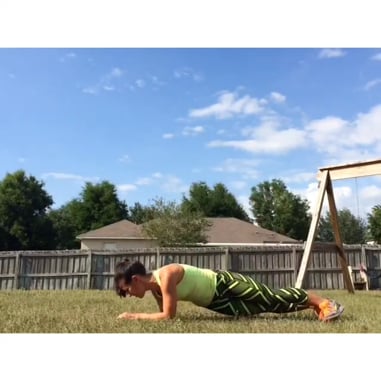
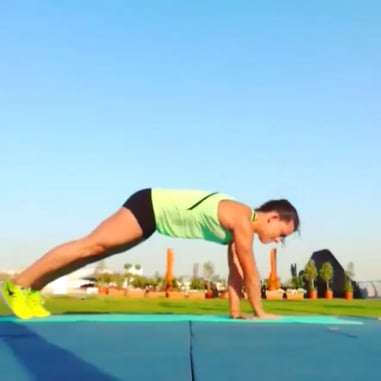
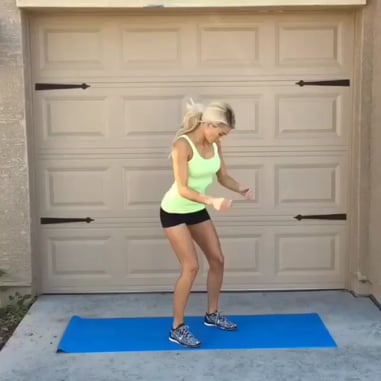
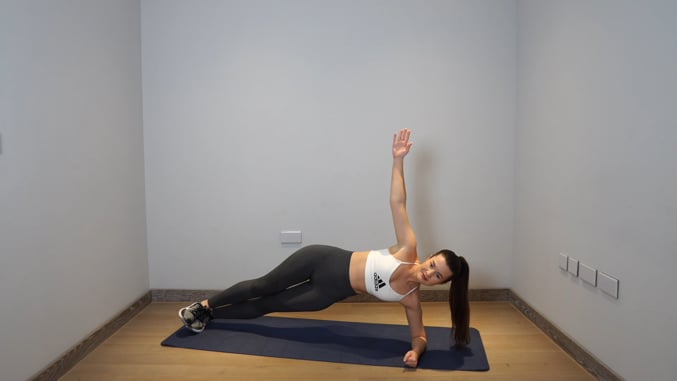
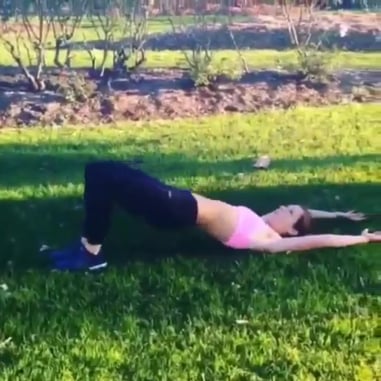
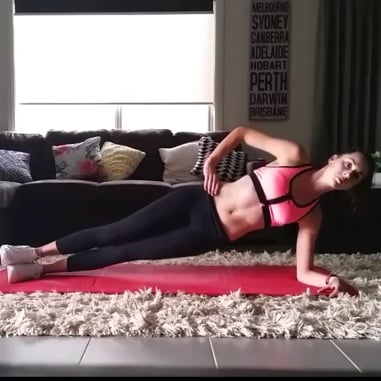
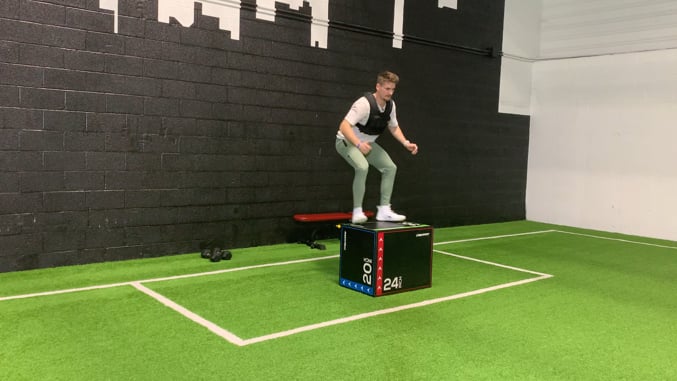
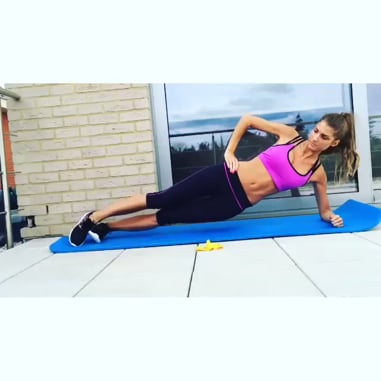
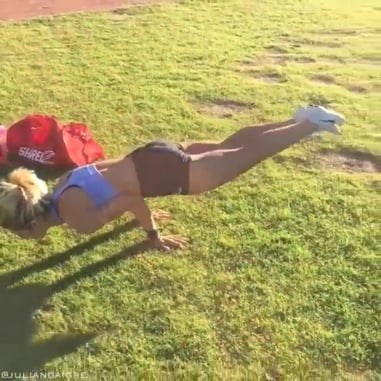
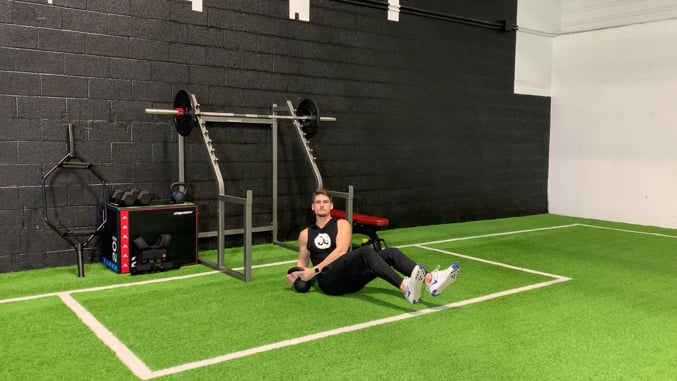
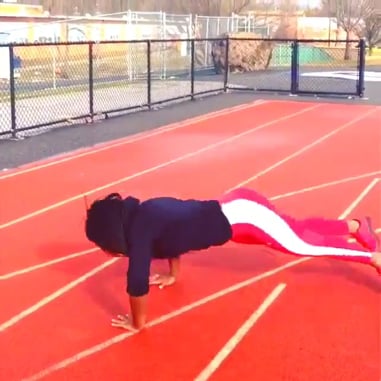
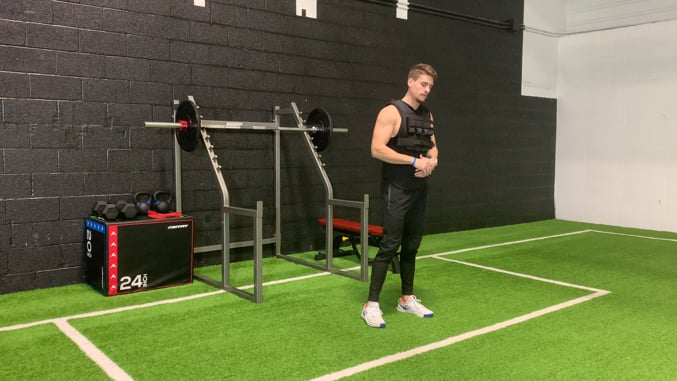
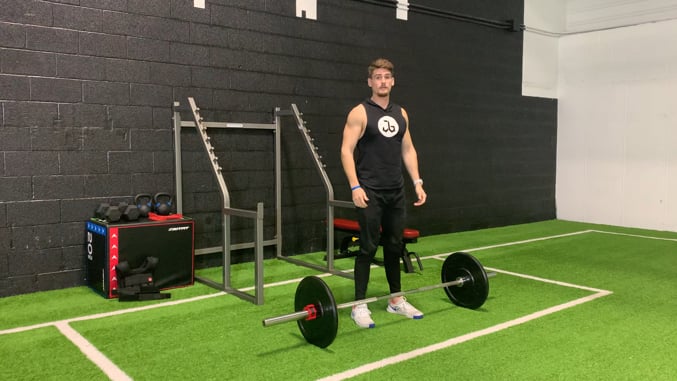
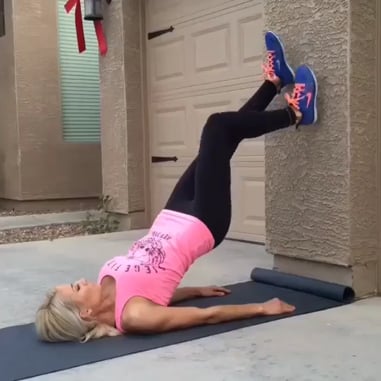
1.Stand straight with your feet shoulder-width apart and flat on the floor. Keep your knees straight, and your toes in slighllty (7 degree angle) out position. Bending your knees and hips simultaneously begin to squat down as you are sitting on a chair. While lower, travel your knees towards your toes and your hips - backward in order to keep the center of gravity over your feet. Then push through your feet and get back to the starting position. 2.Making a large step backward, lower your hips. From this position jump up and switch leg positions. Then jump again and return to the starting position. 3.Put your hands and toes on the mat. Keep your arms straight, but don't lock your elbows. Align your feet making the straight line with your arms and core. Inhailing, bend your elbows and lower your chest to the ground slowly. Straighten your arms to lift your core up, exhailing. 4.Put your hand behind you on an elevated surface. Start lowering yourself until your arms are almost parallel to the floor. Push up until your arms are straight. 2.Lay face down on the mat. Rest your elbows on the floor and lift your feet to an elevated position (like an armchair, chair, or bench).

save to ...

Blog

Did you know that the deltoid muscle is composed of three parts? Therefore, in order to train more effectively, we need to pay attention to each of them. By doing so, harmonious development of the deltoid muscle is possible. Therefore, the goal is to perform special exercises so that the function of each ligament of the deltoid muscle is involved during training. If you want to strengthen your deltoid muscles, you need to train them regularly, so we recommend that you do these exercises for the deltoid muscles Side Dumbbells If you want to develop the posterior deltoids in your shoulders, this is a great exercise to do. It not only works with the deltoids but also the obliques.Hold the dumbbells with a neutral grip and perform bending forward a little keeping your back straight, at this time the dumbbells should be raised to the level of your ears. Front Pull-Up This exercise is great for training the upper body and abdominal obliques.In a seated position, hold a dumbbell in each hand. Lower your arms. Next, raise the dumbbells so that they are parallel to the floor. As you do so, keep your arms straight. When they reach shoulder height, stop. Lower the dumbbells in the same manner. Do the same with the other arm. Lifting to the Side Experts recommend performing these exercises to effectively train the outer deltoid muscles. The effectiveness of your training depends on proper practice, so follow these instructions exactly. Hold a dumbbell in each hand and stand up straight. Now slowly lift the dumbbells. When the dumbbells reach shoulder height, hold them there. Then lower the hands slowly and return to the position from the start. Bench Press Place the barbell on your chest and bring your elbows forward while tensing your abs, glutes, and legs. Repeat lifting and lowering the barbell, then lifting and lowering again.Do not lift as the bar passes over your face, but lower it toward you for optimal trajectory.If the bar remains in front of you instead of over your body at the apex, you will increase the load on your lower back. Try lifting the bar behind your head. Perform 3-5 sets of 6-8 movements each. Free Arm Pushups The exercise itself is a repetition of a smaller range of push-ups with the barbell raised.Stand in an inverted position with your feet against the wall. Bend your elbows to lower your body and place your head on the floor. Lower your head backward and repeat. Be careful when lowering your head to the floor (any unintentional movement can injure your neck).Placing a blanket or thick book under your head will make the exercise more effective.To make it more difficult, place some kind of solid support under your arms. The more reps you do in a set, the better. Perform 3-5 sets, depending on your mood. Developing your deltoid muscles will improve your athleticism and give you a beautiful body, so if you dream of a beautiful body, please do these exercises.
Read more
Sooner or later, every athlete gets injured, especially runners, and most injuries occur in the ankle joint, the medial and lateral parts of the foot. What are the possible causes? Too much training, weight, and the distance you are running. It may be too hard on your feet because we have been walking in shoes all our lives and most of us lead a 'lazy life' and that's why your ankles and feet don't develop properly. So if one day you just start running a lot of miles, your foot muscles will be overloaded leading to all kinds of injuries and inflammation. Obviously, you need to train your feet in order to be able to do any exercise safely and without any impact on your health. So, let's take a quick look at some exercises for your feet muscles. Warm-up exercises Sit down and focus on your toes. Lift your big toe up. At the same time, press the remaining 4 toes toward the ground. Hold this position for 5 seconds. Now hold your thumb and lift the other 4 toes. Hold for 5 seconds. Repeat 10 times for each foot. Knot Take a medium-thick rope, about one meter long. Put the rope on the floor and sit on a chair in front of it. Use your toes to clasp the ends of the rope. Try to tie a knot. Do the exercise for 5 minutes. Note: This is a difficult exercise. Knee Writing Place a piece of paper on the floor. Sit in a chair and put one foot on the paper. Hold the pen with your thumb and index finger. Try to write any word, such as 'mom'. Do this exercise for at least 3-5 minutes. Note: This exercise is very difficult. Do the exercise for 3-4 minutes. Rolling Style Sit in a chair keeping your back straight. Place a tennis ball under your feet. Roll the ball back and forth. Don't forget to keep your back straight. Do this exercise for 2-3 minutes. Repeat with the other leg. Towel Sit on a chair and place a towel under your feet. Grasp the towel with your toes. Your heels should be flat on the floor. Bend and unclench your toes and slowly pull the towel toward you. Switch feet and repeat the exercise. Perform 2 sets of 10 repetitions. You can perform more if you want. Toe Lift This exercise can be performed anywhere, even in the office when you are working at your desk. Sit with your feet flat on the floor. Raise your toes so that the arch of your foot is curved. Slowly lower your toes, keeping the arch of your foot so that you feel the tension in the arch of your foot. Hold this position for 5 seconds, then relax your foot. Repeat for each foot 5 times. Having strong legs will allow you to perform many exercises safely, so don't underestimate leg training and do it at least a few times a week.
Read more
After the abdominal muscles are prepared, the obliques are the next step. The obliques are several groups of abdominal muscles on either side of the main body. The external obliques are at the top and the internal obliques are at the bottom. Training them with functional exercises includes flexion, twisting, and other rotational movements. In order to properly exercise the lateral muscles, however, it is important to remember that most oblique exercises also involve the other abdominal muscles, especially the medial transverse muscles. Therefore, you need to engage certain areas of the abdominal abs in a conscious manner. Lateral twists The basic exercise for the abdominal obliques is the lying lateral twist. Begin with lying on your side with your arm bent at the elbow to support your head. Extend the elbow toward the leg slowly, performing a purposeful contraction of the abdominal obliques. Prone lateral push-ups This exercise is fine for developing the neuromuscular links between the abs and the brain. Lying on the back, pull your left elbow in a slow tempo towards the opposite knee. Perform 12-15 reps on each side, and try to achieve a special burning feeling. Lateral push-ups on a fitness ball The advantage of this exercise is that you achieve a wide range of motion by bending your body slowly and controlling each movement over the ball. As you lift, feel your side abdominals twist and stretch as you descend. Place your arms behind your neck and do not move them apart. Cross contacts Make sure that your legs are straightened up while you are lying on your back. Place your hands on the back of your head and lift your head and shoulder blades slightly. Then do a twisting motion, extending your legs with the opposite arm straight. Perform the same movement for the other side. Repeat at least 20 times. Lift your hips Make sure you are lying straight on one side. Your feet should be lying on top of each other and your free arm fixed at the waist. You need to lift your torso so that your body line is completely straight at peak amplitude. At the apex, pause briefly to emphasize the work of the obliques. As you lower your torso, your thighs are only gently touching the ground and the muscles are not fully relaxed. Developed obliques provide the framework for your abs and make them look amazing, so if you really want to have a great abdomen, you should work both your abs and obliques.
Read more
Trapezius muscles are often underestimated, and many people don’t pay much attention to them while working out. However, it is a huge mistake because these muscles are extremely important for the right posture as well as back health. So in this article, we’ll talk about trapezius muscles and how to develop them. Why Do I Need to Work on Trapezius Muscles? The trapezius is a part of the upper back which helps us to maintain the right posture. The muscle group consists of three different parts, which are top, medium, and bottom. Together with the muscles of the neck, the trapezius is responsible for the right posture. The upper part of this muscle is responsible for the rise of the shoulder as well as the ability to lift arms. The lower one - is for lowering shoulders and arms. At the same time, the middle one is needed for blade movement. As you can see, this muscle group is responsible for many basic functions, which is why developing the trapezius muscles is extremely important for everyone, especially for those people who have some problems with their posture. How Often Should I Do Trapezius Workouts? Ideally, you have to include at least 2-3 trapezius exercises in each workout session. At the same time, you have to work out 3 times a week. In some cases, it’s better to have 4 training sessions per week. In case you have some issues with your posture and you cannot keep your back straight because your spine muscles (especially trapezius) are weak, we recommend doing at least a few exercises for trapezius muscles every day. Who Needs Trapezius Exercises the Most? Of course, everybody needs to straighten their trapezius muscles, but, obviously, some people need it more than others. So who are those people? Well, here is a short list of those you must pay more attention to their trapezius muscles: Office workers who work long hours at the desk People who have posture problems and struggle to keep their back straight Athletes and fitness enthusiasts who lift heavy weights Boxers, volleyballers, basketballers, and other sportsmen who actively involve their arms in their sports activity Dancers and gymnasts who need strong and developed back muscles Do you belong to any of these groups? Then you better start working on your trapezius muscles now. Best Workouts for Trapezius Last but not least, we would like to recommend you some trapezius workouts, so here they come: Shrug Deadlift Shoulder blade squeeze Barbell row Upright row Reverse dumbbell flyes Chin-up Pull-up Push-up Lat-pulldown Rear delt cable raise High pulley cable row Overhead farmer's walk Y raise Rope rear delt pull Wrapping Up Trapezius muscles are super important for your back health, so no matter what your occupation is or how often you work out, you still need to find at least a few minutes for some exercises for the trapezius.
Read more
In the initial stages of training, while people focus on working the chest, arms, and back, the calf muscles are often neglected. As a result, exercises to strengthen the calves are delayed or rarely performed, resulting in a lack of progress. The calf muscles, like the deeper muscles of the back, get little rest during the day because they must support the weight of the body, help maintain balance, and stabilize the joints when walking. This means it is at a lower level of development and the approach to working with it should be different. Thus, we decided to share some exercises for strengthening your calves. Let’s check them out. Calf 45 Of all the exercises intended to develop the calf muscles, this exercise is one of the most challenging. It involves changing the angle of the legs, which involves not only the calves but also the soleus muscles. To perform this exercise, you will need the Gackenschmidt's Machine. Depending on the design, you will stand in front of it or not. Set an appropriate working weight. This is calculated as the arithmetic mean of the working weights from the previous two exercises. Then adjust the weights according to the load. Then lower the heel and stretch the calf as much as possible. Lift with the toes. Hold under extreme tension for 1-2 seconds. Dumbbell Calf Raises This exercise is designed for all levels of athletes and is considered a basic exercise to build calf muscles. Start with standing on a wooden block. You can do this in Smith by placing a step platform under your feet and placing a barbell on your shoulders. Hold your body in a straight position. If you need extra weight, you should take dumbbells or kettlebells. Next, lower your heels under the bar and stretch your ankles as much as possible. Stand up on your toes in a powerful impulsive movement. Hold this position for 1-2 seconds and pull your calves up. Slowly lower yourself back to the starting position. Squat Calf Raises This exercise is great for lazy workouts and will be a great option for beginners. Sit on the seat of the training machine. Place your toes on the support step. Bringing your heels down to the floor as far as possible, lower the lever with the soft stop to your knee and lock it. Leg Press Lie down on a leg press machine. Find a platform where your legs are straight. Fix the speed. You only need to do two movements. Removing the platform from your foot, squeeze it with your toes. Return your toes to their original position. It is important to know that posture has a much greater impact on the development of the shin and calf muscles than movement. Flat feet, if not taken into account and compensated for, can also prevent the shaping of the calves. To improve the calves without exercising, the selection of the proper footwear and a corrected gait is necessary. Well-trained calves will help you perform certain exercises better as well as make your legs look great. So take another look at these exercises and be sure to try them next time.
Read more